
Dryer Vent Access Challenges in Tight Laundry Spaces: What Homeowners Should Know
Learn why dryer vent access can be difficult in tight laundry closets, stacked units, and recessed spaces, along with practical solutions for safe maintenance.
Quick Summary
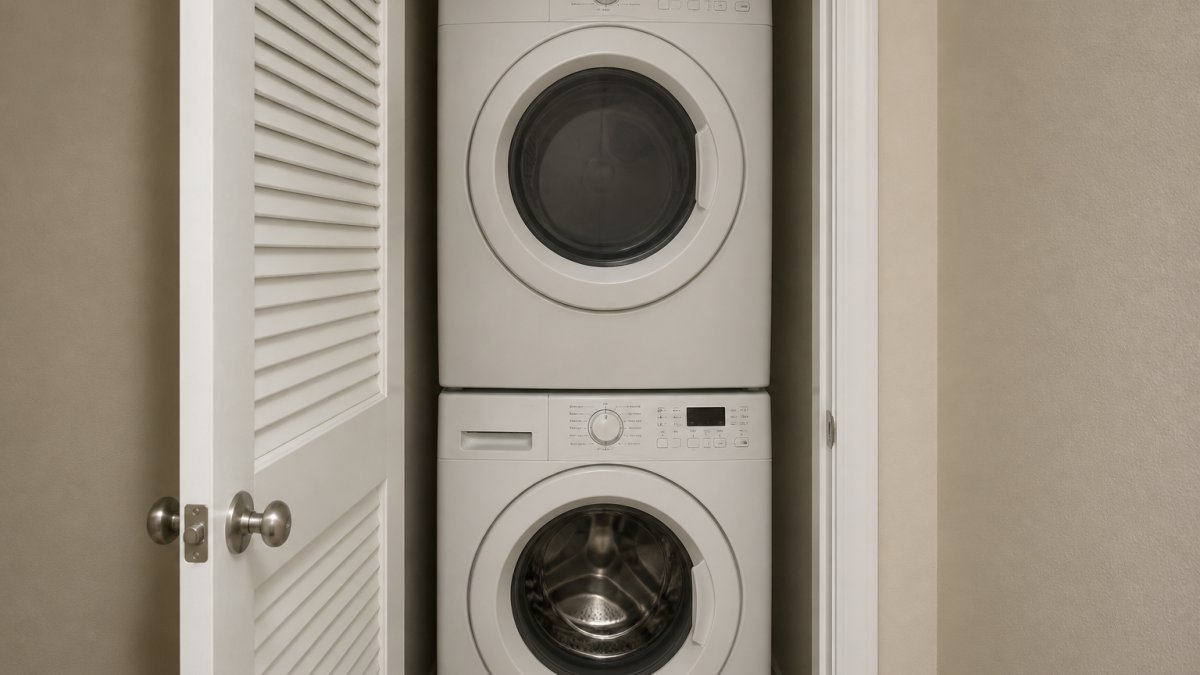
Dryers installed in narrow closets, recessed laundry areas, or stacked configurations can be difficult to access for inspection and maintenance. The appliance may fit the available space, but reaching the exhaust connection behind it can be challenging. Limited clearance can also contribute to crushed or kinked transition ducts.
- Narrow laundry closets: Limited clearance can make it difficult to move the dryer or inspect the exhaust connection.
- Stacked washer and dryer units: Access may require special handling, additional assistance, or coordination with an appliance technician.
- Crushed transition ducts: Flexible connections can become compressed when the dryer is pushed into position.
- Space-saving connections: Recessed vent boxes, suitable low-profile connectors, and certain magnetic connections may help in specific installations.
- Cleaning limitations: The permanent exhaust duct may sometimes be cleaned from outside, but the connection behind the dryer may remain inaccessible.
Table of Contents
- Quick Summary
- When the Dryer Fits, but There's No Room to Work
- Why Access Behind the Dryer Matters
- Common Laundry Room Configurations That Make Access Difficult
- What Happens When the Dryer Is Pushed Back?
- Better Dryer Vent Connections for Tight Spaces
- Can the Dryer Vent Be Cleaned Without Moving the Dryer?
- What Happens When the Dryer Cannot Be Safely Moved?
- What Homeowners Can Do Before Scheduling Service
- Conclusion
- Frequently Asked Questions
When the Dryer Fits, but There's No Room to Work
Not every home has a spacious laundry room. In many apartments, condominiums, townhomes, and even single-family homes, washers and dryers are installed in small closets or recessed areas designed to save living space.
These arrangements are convenient until the dryer needs servicing.
A dryer may fit neatly between two walls, beneath shelving, or inside a laundry closet with barely enough space to open the door. But what happens when someone needs to inspect the exhaust connection behind it?
At ClearFlow Jax LLC, I've encountered laundry areas where limited working space makes accessing the dryer connection one of the more challenging parts of the job.
Sometimes the problem isn't the condition of the exhaust duct itself. It's simply being able to reach it safely.
Why Access Behind the Dryer Matters
The connection between the dryer and the home's permanent exhaust duct is called the transition duct.
This connection allows warm, moisture-laden exhaust air to travel from the dryer into the ductwork that leads outdoors.
Unlike the permanent duct inside the building, the transition duct is generally located directly behind the appliance.
That creates a challenge when the dryer is installed close to the back wall.
If the transition duct is too long, improperly positioned, or compressed as the dryer is pushed into place, airflow can become restricted.
A connection can also become loose or damaged without being visible from the front.
In a tight laundry space, even inspecting this relatively short connection may require moving the appliance.
A dryer that fits neatly into its designated space isn't necessarily installed with adequate access for inspection and maintenance.
Common Laundry Room Configurations That Make Access Difficult
Dryers Installed Inside Narrow Closets
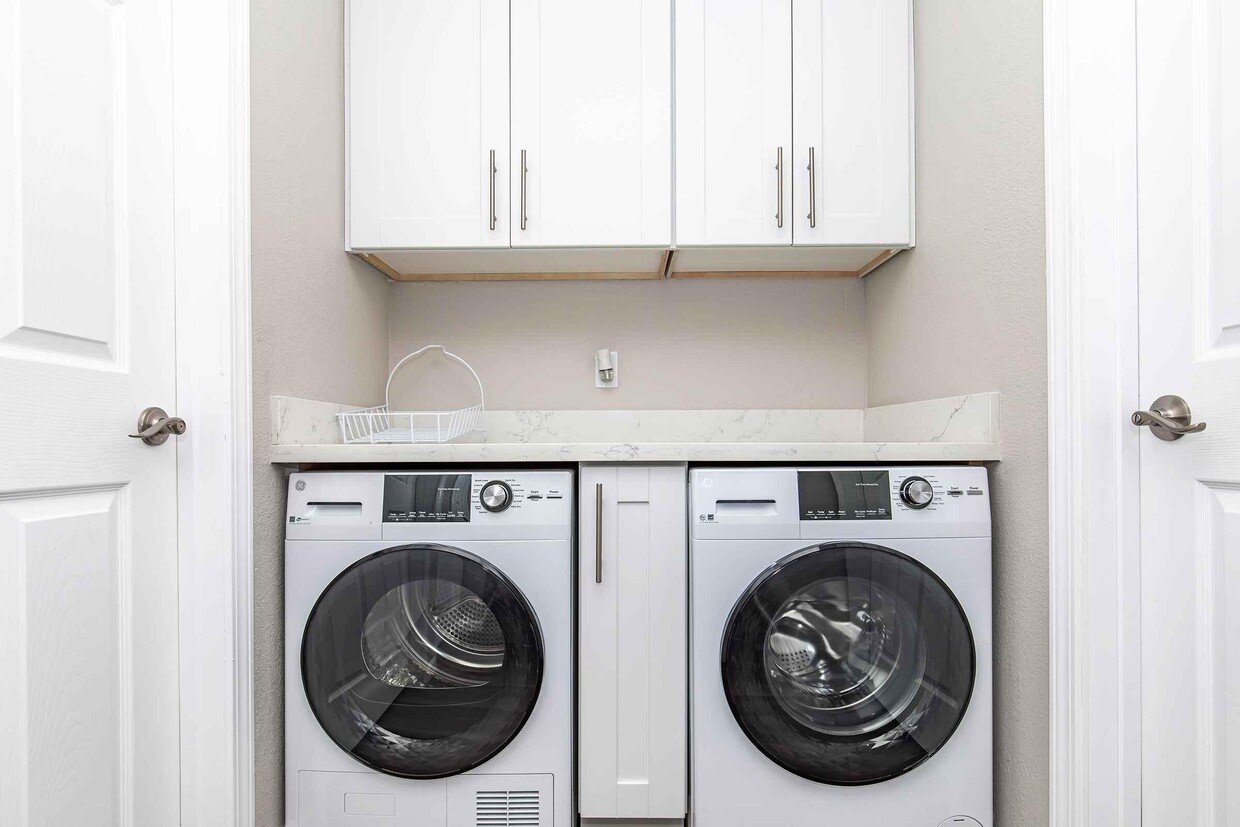
A common arrangement is a washer and dryer positioned side by side inside a closet.
There may be only a few inches between the appliances and the surrounding walls.
In some homes, the machines fit so tightly that one must be moved before the other can be accessed.
Moving the dryer may also involve protecting nearby electrical connections, water supply hoses, and surrounding surfaces.
Even after the dryer is pulled forward, limited working space may make it difficult to inspect the exhaust connection or maneuver cleaning equipment.
Stacked Washer and Dryer Units
Stacked appliances are especially common in apartments and condominiums where floor space is limited.
Depending on the installation, the dryer may sit above the washer, be secured with a stacking kit, or be part of an integrated laundry center.
The exhaust connection may be difficult to reach without moving the entire assembly.
Some installations require additional assistance or an appliance technician to move the equipment safely.
A stacked dryer should not be moved or separated without considering its weight, stability, and manufacturer requirements.
In certain situations, the permanent dryer exhaust duct can still be serviced from an exterior access point, even when the connection behind the dryer cannot be reached.
However, that does not mean the entire exhaust system has been inspected.
Laundry Rooms With Cabinets and Countertops
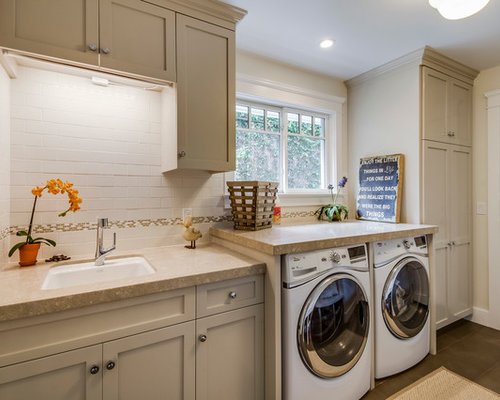
Built-in laundry areas can provide additional storage and improve the appearance of the room.
However, cabinets, countertops, and surrounding trim sometimes leave very little working space around the appliances.
A countertop installed directly above a dryer may prevent the appliance from being repositioned.
Cabinet panels or trim may also block access to the wall connection.
In certain situations, removing a panel or modifying surrounding cabinetry may be necessary before the exhaust connection can be accessed.
Homeowners should understand that cabinetry removal or modification is typically separate from routine dryer vent cleaning.
Dryers Installed in Deep Recesses
Some laundry areas have the dryer positioned inside a recessed space with walls extending along both sides.
Although the appliance may slide forward, reaching behind it can still be difficult.
The position of the wall exhaust opening is another consideration.
If the wall connection is offset from the dryer's exhaust outlet, the transition duct may require an awkward bend.
When space is limited, that bend can become compressed as the appliance is returned to position.
This is why the final position of the dryer matters just as much as how the connection looks while the appliance is pulled away from the wall.
What Happens When the Dryer Is Pushed Back?
One problem homeowners may not realize is what happens to the transition duct after it has been connected.
A flexible connector may appear properly installed when the dryer is pulled forward.
But as the appliance is pushed toward the wall, the connector can fold, twist, or become compressed.
The homeowner often cannot see this happening.
From the front, the dryer appears properly installed. Behind it, however, the exhaust connection may be partially restricted.
The solution isn't always a different flexible hose.
Sometimes the transition duct needs to be shortened, repositioned, or connected using a more suitable arrangement.
The goal is to maintain a proper exhaust connection without creating a restriction when the dryer is returned to its normal operating position.
Better Dryer Vent Connections for Tight Spaces
Several products and installation arrangements may help reduce access and clearance problems.
However, no single product works for every laundry room.
The appropriate solution depends on the appliance, wall connection, available space, and applicable installation requirements.
Recessed Dryer Vent Boxes
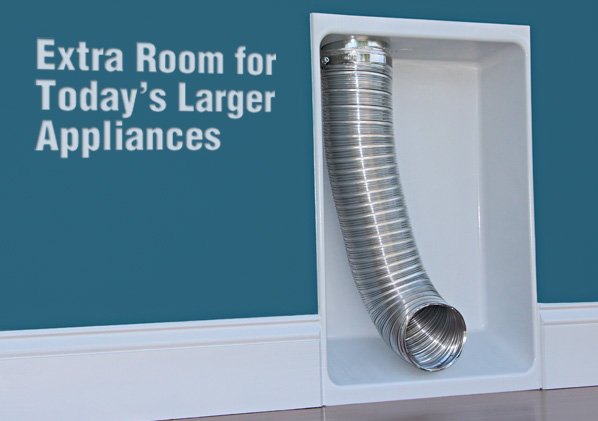
A recessed dryer vent box places part of the exhaust connection inside a properly constructed wall recess.
This can provide additional space behind the dryer and reduce the likelihood of the transition duct becoming compressed.
However, installing a recessed box may require wall modifications and must be completed using an appropriate assembly and installation method.
It may not be practical in every home.
Offset and Low-Profile Connections
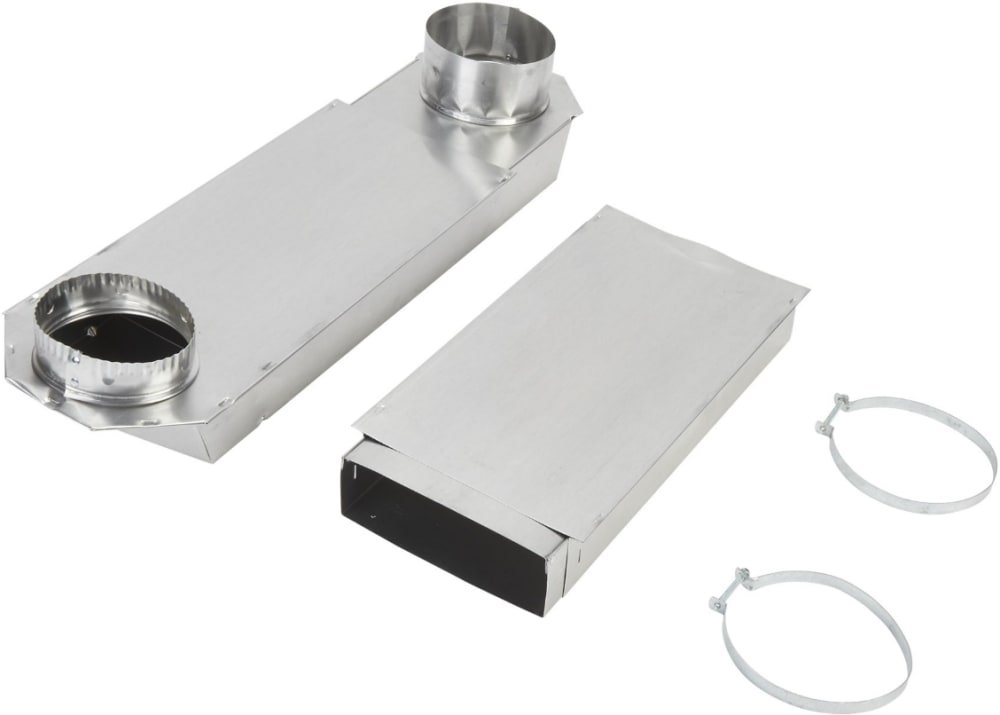
An offset or low-profile exhaust connection may help when the dryer outlet and wall opening do not line up.
Certain metal connectors are designed for installations with limited rear clearance.
These products may reduce the space needed behind the appliance, but they must be appropriate for dryer exhaust use and installed according to the applicable requirements.
A low-profile connection should not be selected solely because it allows the dryer to sit closer to the wall.
Maintaining adequate airflow and following the appliance manufacturer's instructions remain essential.
Magnetic Dryer Vent Connections
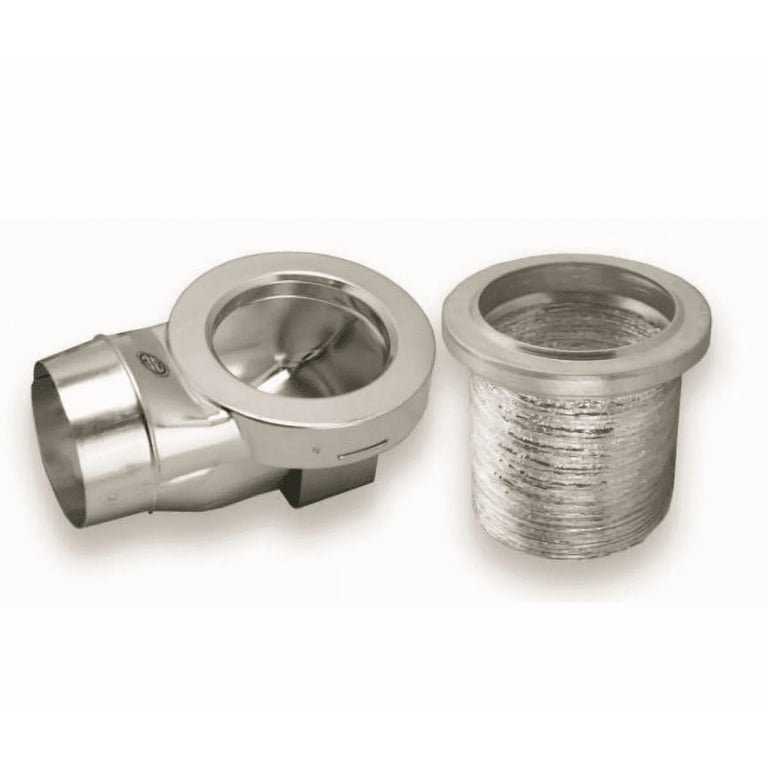
Some installations may benefit from a magnetic dryer exhaust connector.
These systems are designed to align and connect the dryer outlet with the exhaust opening as the appliance is positioned.
In certain tight spaces, this may eliminate the need to reach behind the dryer to secure a conventional connection.
However, magnetic systems are not appropriate for every installation.
The product must be suitable for the intended use, compatible with the dryer and duct arrangement, and installed correctly.
The best connection is the one that is appropriate for the installation and maintains a reliable exhaust path without being crushed or displaced.
Can the Dryer Vent Be Cleaned Without Moving the Dryer?
Sometimes.
Depending on the duct configuration and exterior termination, portions of the permanent dryer exhaust duct may be accessible from outside the home.
Professional cleaning equipment may allow lint to be removed from that direction without moving the dryer.
However, this does not mean every part of the exhaust system can be inspected or cleaned.
The transition connection behind the dryer may remain inaccessible.
Cleaning from the exterior cannot necessarily confirm whether the connector behind the appliance is crushed, damaged, loose, or disconnected.
A camera inspection may provide additional information about accessible portions of the permanent ductwork, but sharp bends, obstructions, and duct configuration can limit how far the camera travels.
Cleaning the accessible ductwork and physically inspecting the connection behind the dryer are two different parts of evaluating the exhaust system.
When access is limited, homeowners should understand which areas were serviced and which could not be reached.
What Happens When the Dryer Cannot Be Safely Moved?
Not every dryer installation allows the appliance to be moved during a routine service appointment.
Stacked units, built-in appliances, restricted working space, and concerns about surrounding surfaces can make movement unsafe or impractical.
When that happens, the technician should explain which parts of the system can be accessed and which cannot.
Depending on the situation, additional assistance or coordination with an appliance technician may be necessary.
In some cases, cabinetry or other surrounding components may need to be removed before the connection can be reached.
The homeowner may also benefit from improvements that make future maintenance easier.
The important point is not to force equipment out of a space when doing so could damage the appliance, electrical connections, plumbing, or surrounding property.
A professional service should clearly explain any limitations rather than suggesting that inaccessible areas were fully inspected.
What Homeowners Can Do Before Scheduling Service
If your washer and dryer are installed in a tight space, a few simple preparations can make the service appointment easier.
- Take a photograph of the laundry area. A picture showing the appliances, surrounding walls, cabinets, and door opening can help the service provider assess potential access limitations.
- Mention stacked appliances. Let the provider know whether the dryer sits above the washer or is part of an integrated laundry unit.
- Identify the exterior vent location. If you know where the dryer exhaust exits the building, share that information when scheduling.
- Clear nearby storage. Remove baskets, cleaning supplies, and other items that could interfere with the work area.
- Discuss access limitations beforehand. Ask what happens if the appliance cannot be moved safely and whether additional work would involve extra charges.
A little information before the appointment can help avoid unexpected complications.
Conclusion
A dryer doesn't need a large laundry room to function properly. However, tight installations can make the exhaust connection difficult to inspect, clean, and maintain.
Closets, stacked appliances, built-in cabinetry, and deep recesses can all limit access.
Sometimes the solution is a better transition connection. In other situations, the appliance arrangement or surrounding space may need to be adjusted.
Cleaning may also be possible from an exterior access point, although certain sections may remain inaccessible.
The important thing is recognizing these limitations rather than assuming every part of the exhaust system can always be reached.
A properly installed dryer should not only exhaust air effectively but also allow for appropriate maintenance throughout its service life.
Frequently Asked Questions
Does a dryer need space behind it?
Yes. The required clearance depends on the dryer model, exhaust connection, and manufacturer's installation instructions. A dryer should not be pushed into a position that crushes or restricts its transition duct.
Can you clean a dryer vent when the dryer is stacked?
In some cases, the permanent exhaust duct can be cleaned from an exterior access point. However, inspecting the connection behind a stacked dryer may require moving the appliance assembly or arranging additional assistance.
What is the best dryer vent connection for a tight space?
There is no universal best option. Recessed vent boxes, suitable low-profile metal connections, and certain magnetic systems may help depending on the installation. Product suitability and manufacturer requirements should guide the selection.
Can a dryer vent hose become crushed behind the dryer?
Yes. A flexible transition connector can become compressed, twisted, or kinked as the appliance is pushed toward the wall. This can restrict airflow even when the connector appeared properly positioned before the dryer was moved.
Can dryer vent cleaning be completed without moving the dryer?
Sometimes the accessible permanent exhaust duct can be cleaned from the exterior. However, when the appliance cannot be moved, the transition connection behind it may remain uninspected. Any access limitations should be explained to the homeowner.
