
Why Your Dryer Takes So Long to Dry: 2026 Fix Guide
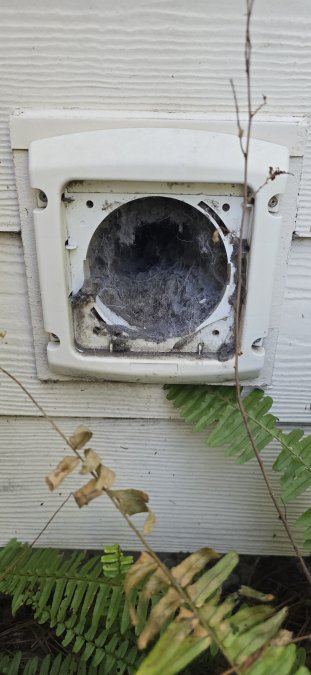
Table of Contents
- Why Your Dryer Takes Long to Dry: Start With These 8 Causes
- Clogged Dryer Vent Symptoms You Should Not Ignore
- When Your Dryer Takes Multiple Cycles to Dry
- How to Clean a Dryer Lint Trap the Right Way
- Dryer Vent Cleaning: A Safe Step-by-Step Inspection
- Settings, Sensors, and Heating Problems That Add Time
- Prevention Schedule to Keep Drying Times Short
- Conclusion
- Frequently Asked Questions
Last Updated: October 8, 2026
Why Your Dryer Takes Long to Dry: Start With These 8 Causes
If your dryer takes long to dry, the cause is almost always restricted airflow, not a broken machine. Airflow problems show up far more often than failed parts. Here is the short version: lint, kinks, and overloaded drums are the usual suspects.
The eight causes we see most often:
- A clogged lint screen or lint filter
- A blocked or restricted exhaust vent
- Poor dryer ventilation and airflow
- A kinked or crushed vent hose
- An overloaded or undersized load
- Clothes that are still soaking wet after the wash
- The wrong cycle or heat setting
- A heating or sensor problem inside the dryer
Most homeowners assume the heating element failed. In practice, that is rare. Restricted airflow is the far more common reason a dryer takes long to dry.
How to Tell Airflow Problems From Heating Problems
Airflow problems show up as a dryer that runs hot but leaves clothes damp. Heating problems show up as a dryer that never gets warm at all. That single difference tells you where to look first.
Run this quick check:
- Dryer gets hot, clothes stay damp: airflow issue. Check the lint screen, vent hose, and exhaust duct.
- Dryer stays cool: heating issue. Check the breaker, thermal fuse, or heating element.
- Dryer runs but shuts off early: sensor or control issue.
If the drum feels warm and the clothes are still wet, stop looking at the heating system. The problem is air movement, not heat.
Drying-Time Benchmarks: What Normal Actually Looks Like
A normal load of laundry should finish in 30 to 45 minutes on a standard cycle. Towels and heavy cottons may take 50 to 60 minutes. Anything past that points to a problem.
Use this table to judge your own machine:
Load Type | Normal Time | Time That Signals a Problem |
|---|---|---|
Light synthetics | 20-30 min | Over 40 min |
Mixed cottons | 30-45 min | Over 60 min |
Towels and bedding | 45-60 min | Over 75 min |
Any load needing a second cycle | Never normal | Every time |
Track your drying time for one week. Write down the start and stop time for each load. If you are consistently hitting the right-hand column, your dryer is telling you something.
Clogged Dryer Vent Symptoms You Should Not Ignore
Clogged dryer vent symptoms are easy to spot once you know them. The most obvious sign is a dryer that takes long to dry on every cycle.
Watch for these warning signs:
- Clothes feel hot but still damp at the end of a cycle
- The top of the dryer is hot to the touch
- You smell a burning or musty odor near the machine
That last one matters more than people think. Lint should travel out of your home through the exhaust duct. If it is piling up outside, air is not moving the way it should.
Why a Blocked Vent Slows Every Load
A blocked vent traps moist air inside the drum. The dryer keeps heating the same damp air, so the load never dries.
A restricted exhaust duct also pushes heat back into the dryer. The U.S. Fire Administration's residential fire data notes that clothes dryers are involved in thousands of home fires each year, and failure to clean the vent is a leading factor.
When Your Dryer Takes Multiple Cycles to Dry
A dryer that takes multiple cycles to dry usually has a load problem or a moisture problem, not a mechanical one. Before you call for repair, check how much you are putting in the drum and how wet the clothes are coming out of the washer.
Overloaded and Underloaded Loads
An overloaded dryer leaves no room to tumble. Clothes stay bunched in a wet ball while the outside dries and the inside stays damp.
An underloaded dryer has the opposite issue. A single heavy towel may not trigger the moisture sensor, so the cycle ends early and the towel stays wet. Add a few items to give the load something to tumble against.
Signs your load size is the problem:
- Clothes clump together at the back of the drum
- The outer layer dries while the middle stays damp
- Small loads come out wet while large loads dry fine
Excess Moisture From the Washer
A washer that leaves clothes soaking wet adds 10 to 15 minutes to every drying cycle. Check your spin cycle. If clothes come out dripping, the spin is not removing enough water.
Try these fixes:
- Run an extra spin cycle on heavy loads
- Balance the load before the spin starts
- Check that the drain hose is not kinked
Clothes should come out of the washer damp, not dripping. If they are dripping, the dryer is doing work the washer should have done.
How to Clean a Dryer Lint Trap the Right Way
Knowing how to clean a dryer lint trap correctly takes about two minutes and prevents most airflow problems.
Here is the full routine:
- Pull the lint screen straight up and out of its slot.
- Peel the lint off with your fingers. Do not press it flat against the mesh.
- Rinse the screen under warm water with a drop of dish soap.
- Check whether water passes through the mesh. If it beads up, the screen has a fabric softener film.
- Scrub gently with a soft brush until water flows through freely.
- Let the screen dry completely before you put it back.
That film is the part most people miss. Fabric softener and dryer sheets leave a waxy coating on the mesh.
You should also check below the lint screen slot. On many dryers, lint slips past the screen and collects in the housing.
Dryer Vent Cleaning: A Safe Step-by-Step Inspection
Dryer vent cleaning starts with safety. Unplug the dryer before you touch anything behind it. Then inspect the vent hose, the exhaust duct, and the outside vent flap for lint, kinks, and blockages.
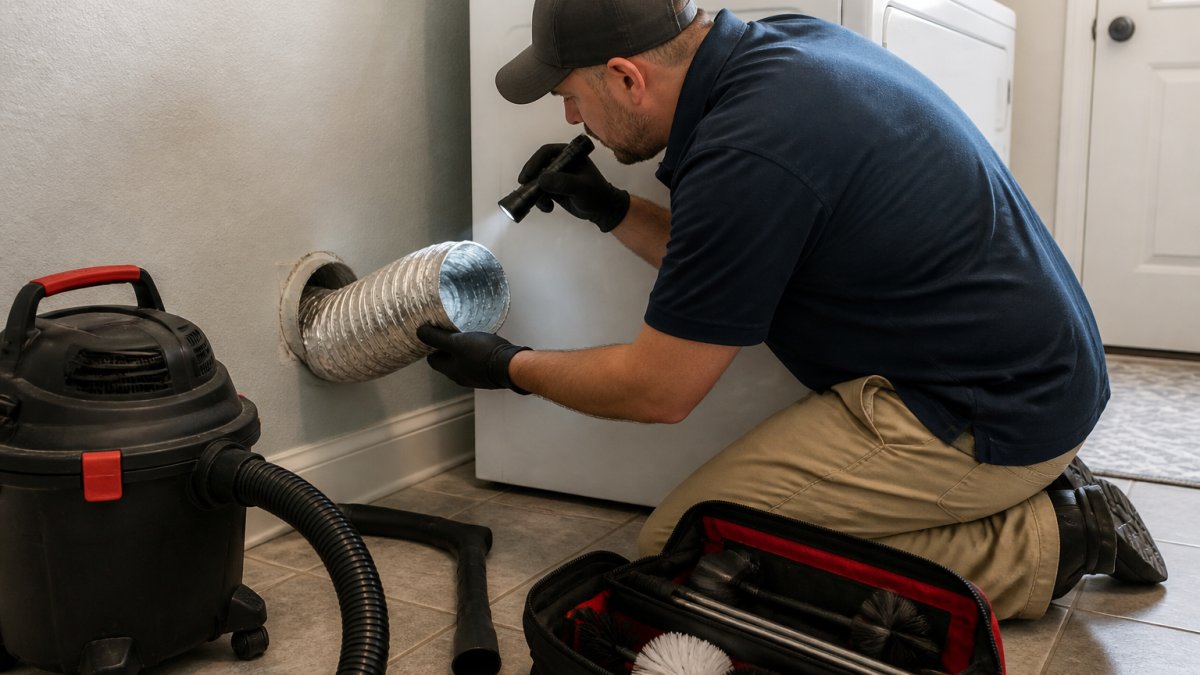
Follow these steps in order:
- Unplug the dryer. Pull the plug, and if it is a gas dryer, shut off the gas valve.
- Slide the dryer out. Keep at least 4 inches of clearance behind it so the hose is not crushed.
- Disconnect the vent hose. Loosen the clamp and pull the hose free.
- Inspect the hose. Look for kinks, crushed sections, or tears. Replace a foil hose with a rigid or semi-rigid metal duct.
- Check the exhaust duct. Shine a flashlight inside. Lint buildup, nests, or debris mean the duct needs cleaning.
- Go outside. Check the vent flap. It should open freely when the dryer runs and close when it stops.
- Clear the blockage. Use a vent brush or vacuum. For long runs or heavy buildup, call a professional.
- Reconnect and test. Run the dryer on air-only for 10 minutes and check the outside flap.
For deeper guidance on vent safety, the U.S. Consumer Product Safety Commission publishes home safety information on dryer vent maintenance.
Gas vs. Electric Dryers: What Changes
Gas dryers need one extra safety step: shut off the gas supply before you disconnect anything. Electric dryers only need the power unplugged.
Beyond that, the airflow system works the same way on both. The vent hose, exhaust duct, and lint screen need the same care.
If you are not comfortable working around a gas line, leave that part to a professional.
Settings, Sensors, and Heating Problems That Add Time
The wrong setting adds time to every load. A moisture sensor that needs cleaning can end cycles early.
Start with your settings:
- Sensor Dry vs. Timed Dry: Sensor Dry ends when clothes are dry. Timed Dry runs for a set time no matter what. Use Sensor Dry for mixed loads.
- Heat setting: High heat is not faster. It can bake lint onto the vent and shrink fabrics. Use medium heat for most loads.
- Cycle selection: Delicates and bulky cycles run longer by design. Check that you are not on the wrong one.
If settings look right, clean the moisture sensor. It is usually two metal strips inside the drum near the lint screen.
Then check the heat. If the drum stays cool after 10 minutes, the problem is the heating element, a thermal fuse, or the breaker.
Prevention Schedule to Keep Drying Times Short
A simple maintenance schedule prevents most long dry times. Clean the lint screen after every load and schedule a full vent inspection once a year.
Task | How Often | Time Needed |
|---|---|---|
Clean the lint screen | Every load | 1 minute |
Vacuum below the lint screen | Monthly | 5 minutes |
Wash the lint screen | Every 3 months | 5 minutes |
Inspect the vent hose for kinks | Every 3 months | 5 minutes |
Full vent and duct cleaning | Every 12 months | 30-60 minutes |
Professional vent inspection | Every 12 months | Varies |
Households with pets, large families, or heavy laundry schedules should shorten that annual interval. More loads mean more lint, and lint is what slows airflow.
If you would rather not handle the deep cleaning yourself, a professional inspection with a camera and airflow test shows exactly what is inside the duct. That is the part a hardware store brush kit cannot reach.
Conclusion
A dryer that takes long to dry is telling you something about airflow, and ignoring it costs you time and money every week. Most of the fixes above take minutes.
Long dry times usually trace back to lint and restricted airflow, and that is exactly what we handle at Clear Flow Jax LLC. Our team uses camera inspections, airflow testing, and rotary-brush cleaning to clear hazardous lint buildup, which helps reduce fire risk and improve appliance efficiency.
Frequently Asked Questions
Why does my dryer take multiple cycles to dry clothes?
Multiple cycles usually point to restricted airflow rather than a weak heating element. Lint buildup in the lint screen, vent hose, or exhaust duct traps moist air inside the drum, so clothes stay damp no matter how long the dryer runs. Other common causes include an overloaded drum that leaves no room to tumble, a kinked vent hose behind the unit, or a washer spin cycle that leaves clothes soaked. Start by checking the lint screen and vent hose, then test a small load on a timed cycle to confirm.
How can I tell if my dryer vent is clogged?
Clogged dryer vent symptoms include clothes that feel hot but still damp after a full cycle, the dryer cabinet getting unusually warm, a burning or musty smell, more lint than usual in the screen, and the outdoor vent flap barely moving when the dryer runs. You may also notice the laundry room feeling humid. If two or more of these appear together, stop running back-to-back cycles and have the vent inspected before using the dryer again.
Is it safe to use a dryer that takes too long to dry?
No. Long drying times are one of the earliest warning signs of lint buildup in the exhaust path, and lint is highly flammable. The U.S. Fire Administration reports that clothes dryers cause roughly 2,900 home fires each year, with failure to clean the vent as the leading factor. If your dryer takes two or more cycles to dry a normal load and the vent has not been cleaned recently, unplug the dryer and schedule a professional inspection before running it again.
When should I call a professional for dryer vent cleaning?
Call a professional if drying times have stretched past 60 to 90 minutes for a standard load, if you notice a burning smell or the vent flap stays closed, if your vent run is long or has multiple bends, or if it has been more than a year since the last cleaning. Homes with heavy use, pets, or a second-floor laundry room need service more often. A technician can run airflow testing and a camera inspection to confirm the blockage. Pricing depends on vent length and access, so request a quote for your specific setup.