
How to Choose Safe Dryer Vent Duct Materials
Last Updated: October 26, 2026
Quick Summary
The material used in a dryer exhaust system matters, but so does where that material is installed. The permanent duct carrying exhaust to the outdoors generally requires smooth-interior metal ductwork. The short transition connector behind the dryer serves a different purpose and may be flexible when it meets the appropriate safety listing and installation requirements.
- Rigid metal duct: Generally the preferred choice for permanent residential dryer exhaust ductwork because it maintains its shape and provides a smooth interior.
- Semi-rigid metal connectors: Some products are suitable for the accessible connection behind a dryer when properly listed and installed.
- Flexible foil connectors: Products vary. A foil connector should not automatically be considered approved simply because it is sold for dryer use.
- Plastic and vinyl ducting: These materials should not be used for ordinary residential dryer exhaust ductwork.
- Replacement decisions: Consider the material, its location, condition, and applicable installation requirements before deciding what needs to be replaced.
Table of Contents
- Why Dryer Vent Duct Material Matters for Safety
- Understanding Rigid Metal Dryer Vent Duct
- Flexible Foil Dryer Duct Safety Concerns
- Why Vinyl and Plastic Ducts Are Unsafe
- Dryer Vent Pipe Code Requirements
- Dryer Vent Duct Replacement Signs and When to Upgrade
- Getting a Professional Duct Assessment
- Conclusion
- Frequently Asked Questions
Why Dryer Vent Duct Material Matters for Safety
Your dryer vent duct is one of the most overlooked components of home safety. The material you choose, or inherit, directly affects fire risk, airflow efficiency, and dryer lifespan.
At ClearFlow Jax LLC, I've encountered different dryer duct materials during residential and commercial inspections, including installations where the type of ducting or its condition raised concerns about airflow and maintenance.
Choosing the right dryer vent duct material is straightforward once you understand what each option does. This guide explains the differences between common dryer duct materials, where they may be used, and when repair or replacement should be considered.
Understanding Rigid Metal Dryer Vent Duct
Smooth-wall rigid metal duct is generally preferred for permanent residential dryer exhaust systems. Common materials include galvanized steel and aluminum. Stainless steel may also be used in certain applications, provided the duct meets applicable requirements.
Rigid metal duct resists lint accumulation better than flexible alternatives.
Galvanized steel is more affordable and widely available.
The main drawback is installation complexity: rigid metal requires more planning, precise measurements, and often professional fitting around bends.
Several types of metal can be used for dryer exhaust ductwork, provided they meet the applicable material and installation requirements.
Material | Typical Application | Main Consideration |
|---|---|---|
Galvanized steel | Permanent dryer exhaust ductwork | Durable, smooth interior, widely available |
Rigid aluminum | Permanent exhaust ductwork when specifications are met | Lightweight and corrosion-resistant |
Stainless Steel | Certain specialized or commercial applications | Durable but generally more expensive |
Regardless of the metal selected, the duct must meet the applicable requirements for interior finish, thickness, diameter, and installation.
Flexible Foil Dryer Duct Safety Concerns
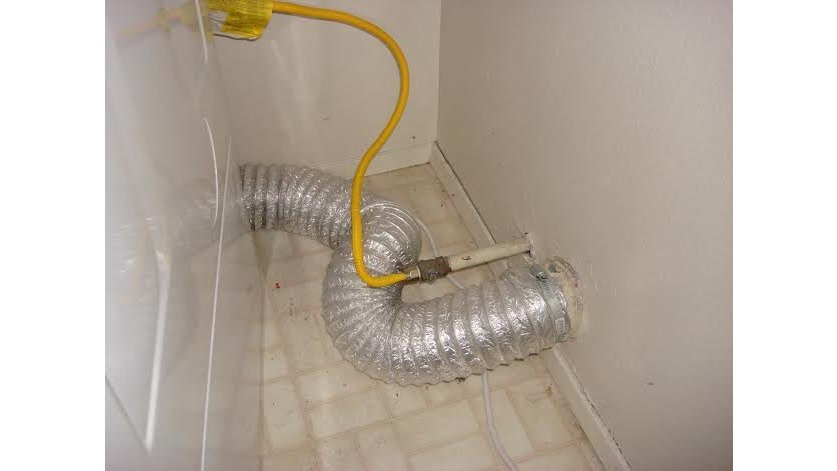
Flexible foil and semi-rigid aluminum are not the same product. Flexible foil connectors typically use thin foil material supported by a spiral wire frame, while semi-rigid aluminum connectors have a formed metal construction that generally maintains its shape better.
Both products are different from the smooth-wall rigid metal duct used for permanent dryer exhaust systems.
Some flexible products are specifically listed for use as dryer transition ducts. When selecting one, look for a UL 2158A listing and confirm that the dryer manufacturer permits its use.
The transition connector must remain accessible, must not pass through concealed construction, and must comply with applicable length requirements.
Corrugated connectors can restrict airflow if crushed, sharply bent, or installed with unnecessary excess length. A short, properly installed connector is preferable to one that is stretched, twisted, or compressed behind the dryer.
Why Vinyl and Plastic Ducts Are Unsafe
Vinyl and plastic ducting should not be used for ordinary residential dryer exhaust installations. These materials do not meet the metal construction requirements for permanent exhaust ducts and can present additional concerns involving heat, damage, and lint accumulation.
Plastic and vinyl products with corrugated interiors may also create resistance to airflow and areas where lint can collect.
If plastic or vinyl ducting is connected to your dryer, its location and purpose should be evaluated. Replacing it with appropriate metal ductwork or a properly listed transition connector, depending on the application, is the recommended approach.
Dryer Vent Pipe Code Requirements
Building codes set the floor, not the ceiling, for dryer vent safety. Dryer Vent Routing Problems in Older Homes: What Homeowners Should Know explains how improper duct routing in older installations relates to these code requirements and material safety standards. Understanding what the code says versus what manufacturers recommend helps you judge whether an installation is merely legal or genuinely safe.
What the model code actually requires
For ordinary residential clothes dryers, the applicable building code distinguishes the permanent dryer exhaust duct from the transition duct that connects the dryer to that system.
- Permanent exhaust duct: Generally requires smooth-interior metal construction meeting the applicable minimum thickness and nominal four-inch diameter requirements.
- Transition connector: Must be listed and labeled to UL 2158A, must not exceed the applicable maximum length, and cannot be concealed within building construction.
- Duct length: Under the commonly used prescriptive code method, the allowable permanent exhaust duct length is 35 feet before accounting for applicable fitting reductions. Manufacturer instructions or other code-approved methods may establish different allowable configurations.
- Elbows and fittings: Their equivalent lengths must be accounted for using the applicable fitting table or manufacturer's instructions. Not all elbows have the same equivalent length.
- Exterior termination: Dryer exhaust must discharge outdoors through an appropriate termination. Screens that collect lint must not obstruct the exhaust outlet.
- Connections and supports: Ductwork must be properly supported, joined, and sealed. Fasteners must meet the applicable rules concerning protrusions into the exhaust passage.
These provisions apply to ordinary residential dryer installations. Commercial laundry systems and specialized equipment may have different design requirements.
Code minimum versus manufacturer instructions
Building codes and dryer manufacturer instructions both matter. Manufacturer instructions may specify permitted duct materials, allowable lengths, or particular installation requirements. The final installation must satisfy the applicable code and the manufacturer's instructions.
A vent run that passes a code inspection can still violate the manufacturer's instructions, so if you're replacing a dryer or duct, check both the code and the installation manual.
Where local amendments change the picture
Building requirements can vary by jurisdiction, adopted code edition, and installation type. For homes in Jacksonville and North Florida, refer to the applicable Florida Building Code and local building department requirements rather than assuming that every provision in a national model code applies without modification.
What the code does not cover
Building codes establish installation requirements, but they do not provide a universal cleaning interval for every household. Even a correctly installed dryer exhaust duct may accumulate lint or develop damage over time. Maintenance recommendations should account for usage, installation conditions, and the dryer manufacturer's guidance.
The U.S. Fire Administration has published information about residential clothes dryer fires, including contributing factors and the importance of proper maintenance. Building code compliance and routine maintenance both play a role in reducing risk, but neither guarantees that a dryer fire cannot occur. https://www.usfa.fema.gov/prevention/home-fires/prevent-fires/appliance-and-electrical
Dryer Vent Duct Replacement Signs and When to Upgrade
Most guides list the same warning signs: longer dry times, visible lint, moisture, crushed duct. Those symptoms are real, but they don't tell you whether the fix is cleaning, repair, or full replacement. The decision depends on the duct material, because each fails differently.
Rigid metal duct
Rigid metal ductwork does not automatically require replacement because of its age. If it remains properly installed, securely connected, and free of significant damage, cleaning or an isolated repair may be sufficient.
Replacement should be considered when sections are severely crushed, corroded, disconnected, or otherwise unsuitable for continued use. When the problem affects only one section, the entire duct run may not need replacement.
Semi-rigid and flexible metal duct
Semi-rigid metal products are commonly used as accessible dryer transition connectors when appropriately listed and installed. They should not automatically be treated as suitable replacements for permanent concealed ductwork.
If a connector is crushed, kinked, torn, or excessively long, replacement may be appropriate. Any replacement should be selected according to the dryer's installation instructions and applicable requirements.
Foil duct
Thin flexible foil connectors deserve particular attention because they can be easily crushed, twisted, or damaged. Some products are listed for dryer connections, while others may not meet the necessary requirements.
If a foil connector is damaged, improperly installed, or lacks an appropriate listing, replacing it with a suitable UL 2158A-listed metal transition connector is a reasonable improvement.
Flexible foil should not be used as permanent concealed dryer exhaust ductwork.
Vinyl and plastic duct
Plastic and vinyl ducts are not appropriate for ordinary residential dryer exhaust systems. If these materials are discovered, the installation should be evaluated and corrected using suitable materials.
The corrective work may involve replacing the transition connection or a section of permanent ductwork, depending on where the improper material was installed.
The decision framework
The decision to clean, repair, or replace dryer exhaust ductwork should be based on the material, its location, and its condition. Suitable, undamaged ductwork may only need cleaning. Damaged sections or improper materials may require replacement, while a fundamentally poor exhaust route may need redesign.
Getting a Professional Duct Assessment
When choosing replacement materials, the first step is identifying whether the concern involves the permanent exhaust duct or the accessible transition connector behind the dryer.
A physical examination of accessible components can often identify improper materials, crushed connections, loose joints, or deterioration. Camera inspections may provide additional information about accessible portions of concealed ductwork, but they cannot always reveal the entire system.
For additional information about the inspection process, see our article, Professional Dryer Vent Camera Inspection: What to Expect.
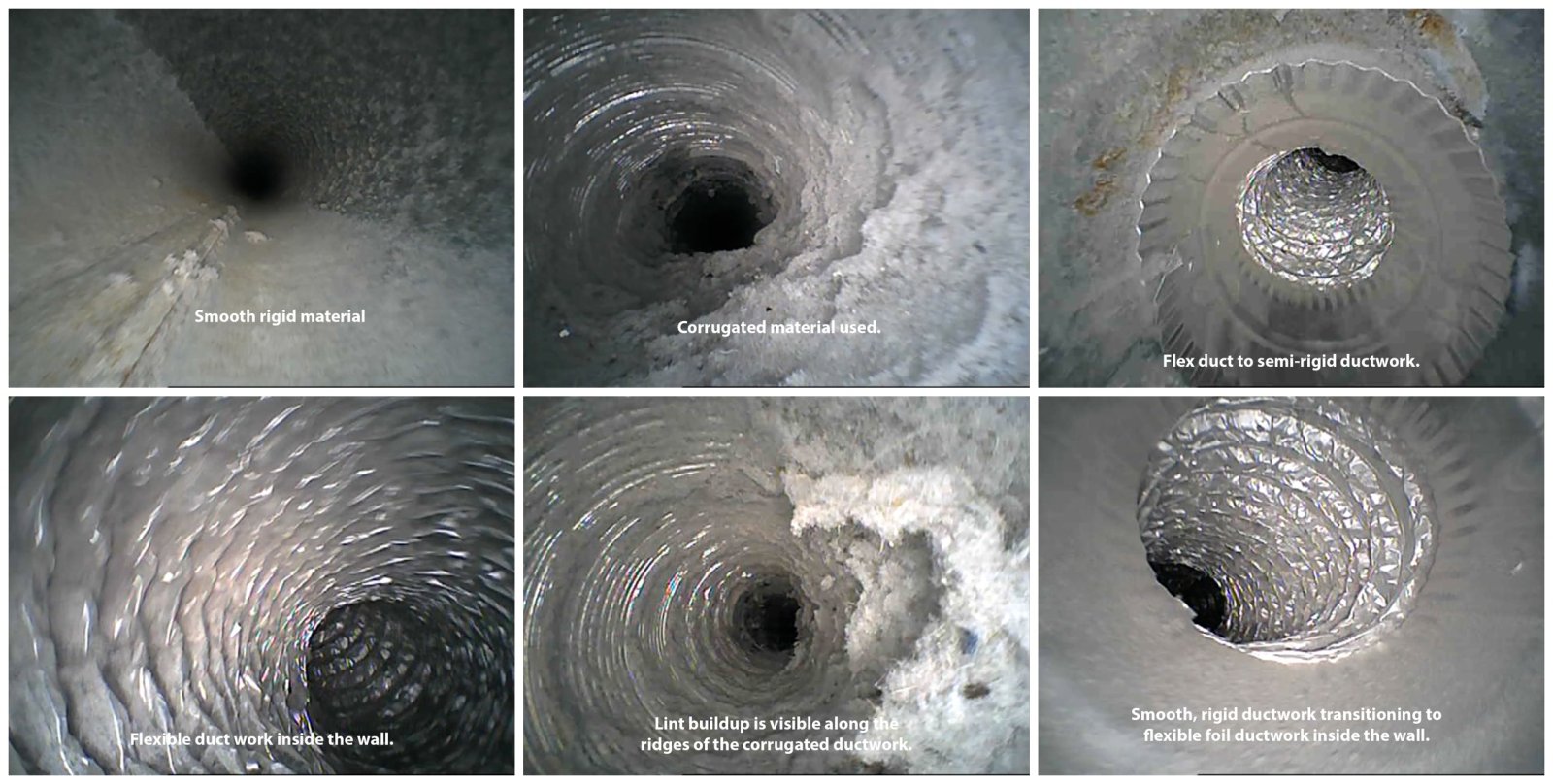
Inside the Dryer Vent: What a Camera Inspection Reveals
Conclusion
Choosing the right dryer duct material isn't just about whether the product is made of metal. It's also about where the material is installed, whether it meets the appropriate requirements, and whether the duct remains properly supported and connected.
Smooth-wall rigid metal ductwork is generally the preferred solution for permanent dryer exhaust systems. The connection behind the dryer may use an approved flexible transition connector, but it must be suitable for that specific application.
Before replacing an entire exhaust system, determine which parts actually need attention. Sometimes a damaged connector is the only problem. In other cases, inappropriate concealed duct materials or an installation defect require more extensive correction.
Frequently Asked Questions
What material is safest for a dryer vent duct?
For permanent residential dryer exhaust ductwork, smooth-interior rigid metal is generally preferred. Common options include galvanized steel and suitable rigid aluminum. The material must meet applicable code and manufacturer requirements. An approved flexible metal transition connector may be used behind the dryer when installed correctly.
Are foil dryer hoses safe to use?
Not all foil dryer connectors are the same. Some flexible products are specifically listed for dryer transition connections, while others may be unsuitable. A connector should meet UL 2158A requirements and the dryer manufacturer's instructions. Thin foil connectors can be vulnerable to crushing or kinking, so a properly installed listed semi-rigid metal connector may be a preferable alternative.
What are the code requirements for dryer vent pipe?
Ordinary residential dryer exhaust systems generally require smooth-interior metal ductwork of the specified thickness and nominal four-inch diameter. Permanent duct length must comply with applicable code provisions and dryer manufacturer instructions, including allowances for elbows. Transition ducts have separate listing, length, and installation requirements. Dryer exhaust must terminate outdoors.
How can I tell if my dryer vent duct needs to be replaced?
Replacement may be appropriate when the duct material is unsuitable, a section is severely damaged, or the installation cannot be corrected through cleaning or a limited repair. Longer drying times alone do not prove that replacement is necessary. The cause should be identified before deciding whether to clean, repair, or replace the ductwork.
