
Commercial Dryer Vent Cleaning: A Guide for North Florida Property Managers
A practical guide to commercial dryer vent cleaning for North Florida property managers. Learn about cleaning frequency, inspections, fire safety, and maintenance.
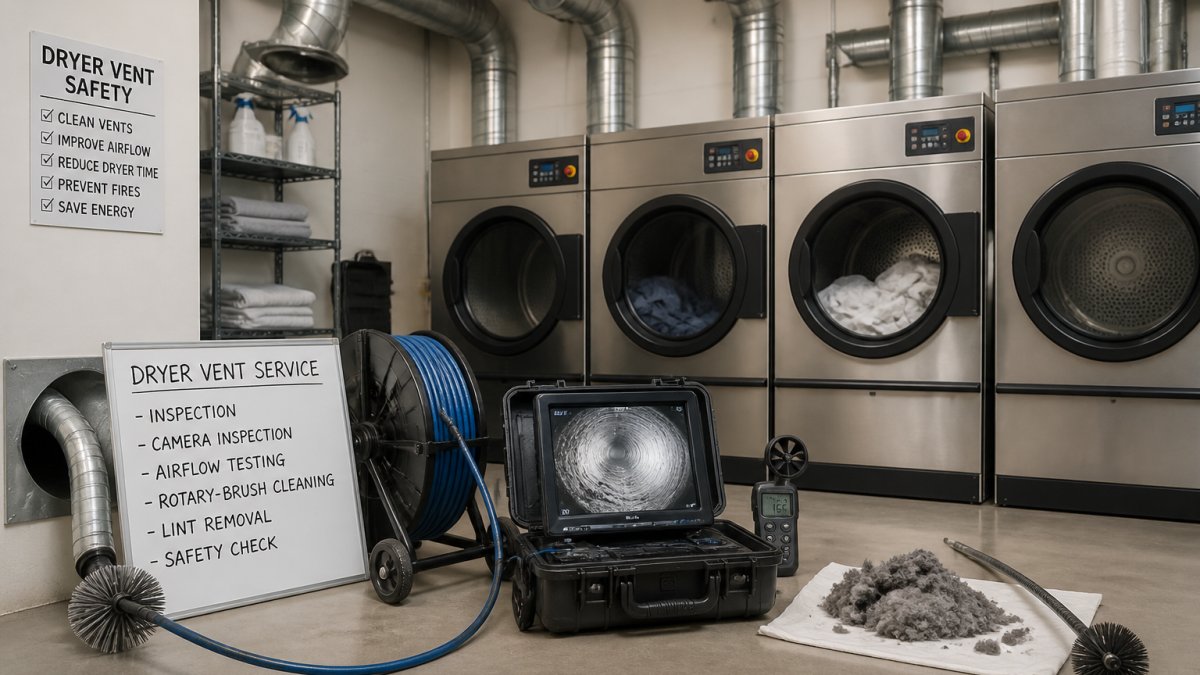
Table of Contents
- Why Commercial Dryer Vent Cleaning Matters for Building Safety
- Commercial Dryer Vent Cleaning Frequency: Recommendations by Facility Type
- Commercial Dryer Vent Inspection: What Professionals Look For
- The Commercial Dryer Vent Cleaning Process: Equipment and Methodology
- Commercial Dryer Vent Maintenance Checklist Between Professional Services
- Codes, Standards, and Documentation for Commercial Exhaust Systems
- Common Issues and Performance Indicators in Commercial Dryer Exhaust Systems
- Conclusion
- Frequently Asked Questions
Last Updated: October 14, 2026
Why Commercial Dryer Vent Cleaning Matters for Building Safety
Commercial dryer vent cleaning is one of the most overlooked maintenance tasks in multi-unit and commercial facilities. Most property managers don't think about it until something breaks or a fire threat emerges. That's the wrong approach.
Lint accumulation inside dryer exhaust ducts can create serious fire hazards. In facilities where dryers operate frequently, such as hotels, laundromats, apartment communities, and assisted living facilities, lint can accumulate more quickly than in a typical residential setting. Restricted airflow can cause excessive heat buildup, longer drying cycles, and increased stress on dryer components. Because lint is combustible, maintaining a clean and properly functioning exhaust system is an important part of fire prevention.
Beyond fire risk, clogged exhaust systems force dryers to work harder and longer. Drying times increase, energy consumption climbs, and appliance lifespan shrinks. For facilities running dozens of dryers daily, this translates to higher utility bills and frequent replacement costs.
For property managers, one of the biggest challenges with dryer vent maintenance is that lint accumulation often occurs in areas that cannot be seen during routine inspections. Camera inspections, when accessible, and documented cleaning results can help reveal these hidden conditions and support informed maintenance decisions.
Commercial Dryer Vent Cleaning Frequency: Recommendations by Facility Type
How often should you schedule commercial dryer vent cleaning?
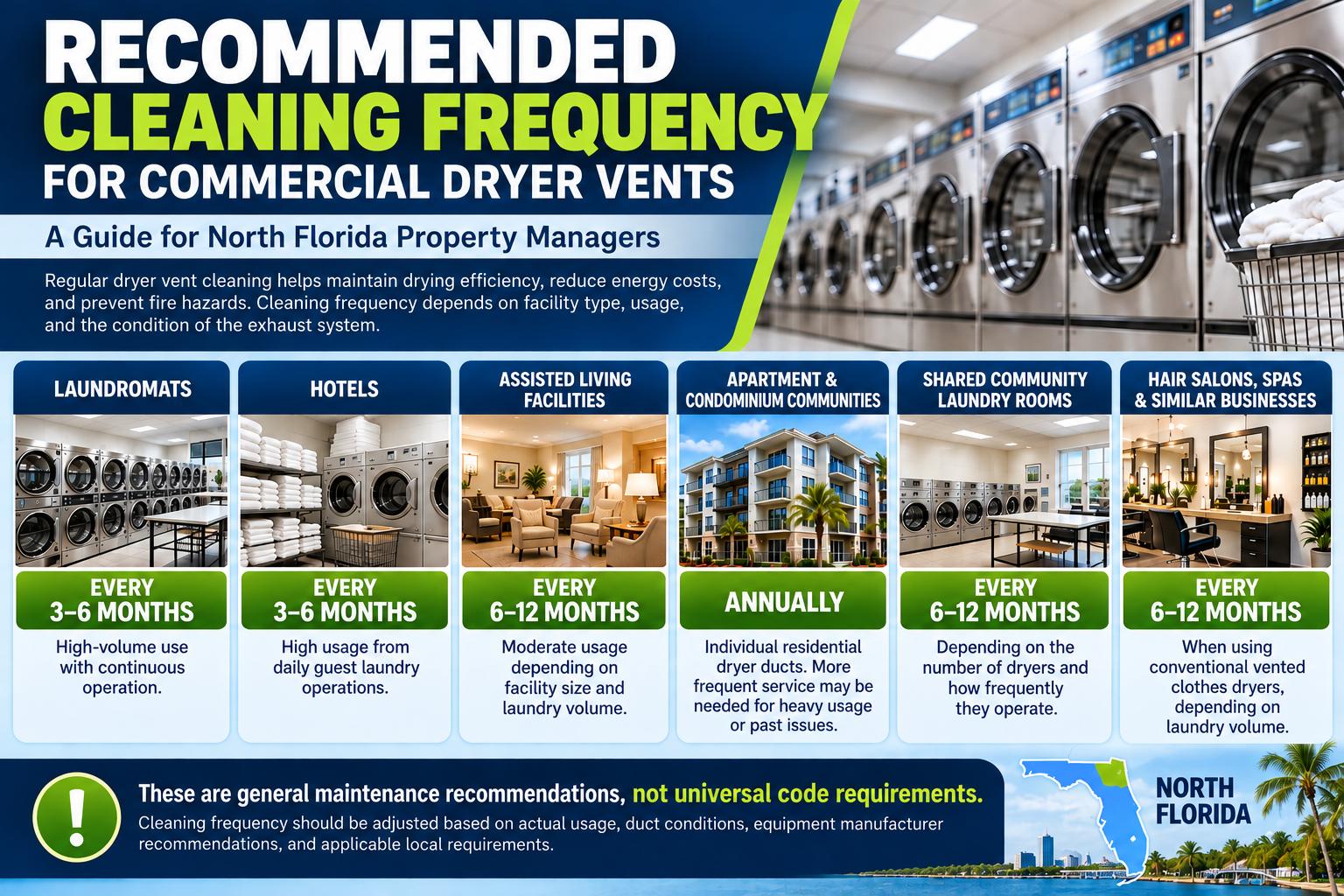
The answer depends on the type of facility, how frequently the dryers operate, and the condition of the exhaust system. Unlike residential dryers that may operate only a few times per week, commercial dryers can run multiple cycles throughout the day. This increased usage can lead to faster lint accumulation and a greater need for routine inspections and maintenance. The following are general starting recommendations for evaluating cleaning frequency:
Laundromats: Every 3–6 months, depending on daily usage and lint accumulation.
Hotels and High-Volume Laundry Facilities: Every 3–6 months, particularly when dryers operate throughout the day.
Assisted Living Facilities: Every 6–12 months, depending on laundry volume and equipment usage.
Apartment and Condominium Communities: Annual cleaning is a reasonable starting point for individual residential dryer ducts. Properties with heavy usage or a history of significant lint accumulation may require more frequent service.
Shared Community Laundry Rooms: Every 6–12 months, depending on the number of dryers and how frequently they operate.
Hair Salons, Spas, and Similar Businesses: Every 6–12 months when using conventional vented clothes dryers, depending on laundry volume.
These intervals are general maintenance recommendations, not universal code requirements. Cleaning frequency should be adjusted based on actual duct conditions, airflow performance, equipment manufacturer recommendations, and applicable local requirements.
Property managers should also distinguish between individual residential dryer ducts and shared commercial laundry systems. These installations can have very different exhaust configurations and maintenance needs.
Important: Do not rely on cleaning schedules alone. If dryers begin taking longer to dry clothes, airflow becomes noticeably restricted, or excessive lint is found at the exterior termination, the system should be inspected regardless of when it was last cleaned.
Commercial Dryer Vent Cleaning Guide
Commercial Dryer Vent Inspection: What Professionals Look For
A thorough commercial dryer vent inspection goes beyond a surface-level check. Professionals examine the accessible portions of the exhaust system to identify blockages, damage, and efficiency problems.
Lint and debris accumulation is the primary concern. Inspectors look for buildup inside the vent pipe, at connection points, and in the exhaust duct. Even partial blockages reduce airflow and force dryers to work harder.
Duct integrity and damage is critical. Crushed, kinked, or separated ducts restrict airflow and trap lint. Corrosion in metal ducts or deterioration in flexible ducting can create weak points where lint escapes into wall cavities, a serious fire hazard.
Blockages and obstructions at the exhaust termination point are common in commercial settings. Bird nests, insect damage, or debris blocking the exterior vent opening can completely restrict airflow.
Airflow measurement using specialized testing equipment determines whether the system operates efficiently. Proper airflow ensures dryers dry clothes in normal time. Reduced airflow indicates blockages or system design problems requiring attention.
Camera inspections can help identify hidden lint accumulation, obstructions, disconnected ductwork, and other visible concerns within accessible portions of the exhaust system. However, duct length, configuration, and existing blockages may limit how far the camera can travel.
When conditions permit, airflow measurements provide additional information about system performance before and after cleaning. Photos and video documentation can also help property managers understand the condition of the exhaust system and identify areas that may require additional attention.
The Commercial Dryer Vent Cleaning Process: Equipment and Methodology
Professional commercial dryer vent cleaning requires equipment and methods appropriate for the exhaust system being serviced. Duct length, accessibility, configuration, and the severity of lint accumulation all influence the cleaning process.
Compressed-Air Cleaning: Specialized compressed-air tools can be used to loosen accumulated lint and move debris through the exhaust duct toward an accessible collection or discharge point.
Rotary Brush Cleaning: Rotating brushes provide mechanical agitation to help remove lint and debris adhering to duct walls. Different brush types may be selected depending on the duct material, configuration, and condition.
Vacuum Equipment: Professional vacuum systems may be used to collect loosened lint and debris, particularly when cleaning from interior locations or when controlling debris is important.
Access Planning: Commercial buildings and multifamily properties can have complicated duct configurations. Technicians assess accessible portions of the system, identify cleaning locations, and determine which methods can be used safely and effectively.
Post-Cleaning Airflow Testing: When conditions permit, airflow measurements can help evaluate system performance before and after cleaning. Improvements in airflow can indicate that restrictions have been reduced, although airflow measurements alone may not identify every underlying problem.
Documentation: Before-and-after photographs, camera inspection findings when available, and airflow measurements can provide property managers with valuable information about the condition of their dryer exhaust systems.
The time required for commercial dryer vent cleaning depends on the number of dryers, duct lengths, system accessibility, and the amount of accumulated lint or debris. Larger facilities and complex exhaust systems may require additional time, equipment, or scheduled service visits.
Commercial Dryer Vent Maintenance Checklist Between Professional Services
Professional cleaning happens on a scheduled basis, but property managers should monitor system performance between visits.
Monthly visual inspections catch obvious problems early. Check the exterior vent opening for debris, bird nests, or damage. Ensure the damper (if present) opens and closes freely.
Dryer performance observation provides early warning signs. If drying times increase noticeably or clothes emerge still damp after a normal cycle, airflow restriction may be developing.
Lint Screen Maintenance: Clean dryer lint screens after each load or according to the manufacturer's instructions. High-use commercial dryers may require additional inspections throughout the day to maintain proper airflow and prevent excessive lint accumulation.
Duct Connection Checks: Visually inspect safely accessible duct connections for signs of separation, damage, or escaping lint. Loose connections or damaged ductwork should be evaluated and corrected by qualified personnel. Avoid disturbing concealed ductwork or attempting repairs that require specialized knowledge.
Exhaust termination inspection should happen seasonally. Ensure the exterior vent opening is clear, the damper moves freely, and no weather damage is visible. After heavy storms, check for debris accumulation around the opening.
Documentation of all observations creates a maintenance record. Note dates of inspections, any issues found, and corrective actions taken. This record supports insurance claims and demonstrates due diligence in building safety.
Codes, Standards, and Documentation for Commercial Exhaust Systems
Commercial dryer exhaust systems are subject to applicable building, mechanical, and fire safety requirements. These requirements may address approved duct materials, duct sizing, installation methods, exhaust termination locations, and safe system operation.
In North Florida, applicable requirements may include provisions of the Florida Building Code, including its Mechanical and Building volumes, along with locally enforced fire prevention requirements.
Commercial laundry equipment may also have specific installation and maintenance requirements established by the manufacturer. Property managers should verify the requirements applicable to their facility rather than assuming all commercial dryer systems follow the same standards.
Maintenance documentation should include:
- Dates of professional cleaning and inspections
- Identification of the equipment and duct systems serviced
- Before-and-after photographs when available
- Camera inspection findings when accessible
- Airflow measurements when performed
- Damage, obstructions, or installation concerns identified
- Repairs completed and recommendations for future maintenance
Maintaining detailed service records helps property managers track recurring problems, plan preventive maintenance, and demonstrate the maintenance activities performed.
Documentation can also provide useful information during property inspections, insurance reviews, or maintenance planning. However, cleaning records alone do not establish compliance with every applicable building or fire safety requirement.
Common Issues and Performance Indicators in Commercial Dryer Exhaust Systems
Recognizing warning signs allows property managers to address problems before they become hazardous.
Extended drying times are the most obvious indicator of system problems. When clothes that normally dry in 45 minutes now take 60-90 minutes, airflow restriction is likely present.
Moisture accumulation around dryers or in surrounding spaces suggests that exhaust is not properly venting outdoors. This moisture can damage walls, promote mold growth, and create uncomfortable conditions.
Hot air discharge from the dryer cabinet or surrounding area means the exhaust system is not drawing air properly.
Visible lint around dryer exhaust connections or exterior vent openings points to system leaks.
Unusual odors from dryers, musty, burnt, or chemical smells, can indicate lint buildup, mold growth in ducts, or other problems requiring professional attention.
Increased utility bills without corresponding increase in usage may reflect reduced dryer efficiency. When exhaust systems are partially blocked, dryers consume more energy to achieve the same drying results.
Noise changes during dryer operation, rattling, vibration, or grinding sounds, suggest loose components, duct damage, or foreign objects in the system.
Any of these indicators warrants professional inspection. Addressing problems early prevents safety hazards and maintains system efficiency.
Important Safety Warning: If a dryer produces a burning smell, excessive heat, smoke, or other signs of a potentially dangerous condition, discontinue its use until the cause has been identified and corrected by a qualified professional. If smoke or fire is present, follow emergency procedures and contact emergency services. Continued operation of a malfunctioning dryer may increase the risk of equipment damage or fire.
Conclusion
Commercial dryer vent cleaning plays an important role in maintaining safe and efficient laundry operations. Whether managing an apartment community, hotel, assisted living facility, or commercial laundry operation, regular inspections and maintenance can help identify developing problems before they result in equipment damage, extended drying times, or potential fire hazards.
Cleaning schedules should reflect actual equipment usage, duct conditions, and manufacturer recommendations rather than relying on a one-size-fits-all approach.
Maintaining records of inspections, cleaning results, and recommended repairs also gives property managers valuable information when planning future maintenance.
For North Florida property managers, establishing a consistent dryer vent maintenance program is a practical step toward protecting residents, maintaining equipment performance, and reducing preventable problems.
Frequently Asked Questions
How often should commercial dryer vents be cleaned?
Cleaning frequency depends on facility type and usage volume. Laundromats and commercial laundry facilities typically require cleaning every 3-6 months due to heavy daily use. Hotels and assisted living facilities generally need service every 6-12 months. Multi-family residential buildings with shared laundry should be inspected semi-annually. The key is monitoring airflow efficiency and lint accumulation—when drying times increase noticeably or exhaust airflow drops, cleaning is overdue.
What are the main risks of lint buildup in a commercial dryer vent system?
Lint accumulation creates multiple hazards. The primary risk is fire: lint is highly flammable, and restricted airflow causes heat to concentrate, potentially igniting the buildup. Secondary risks include reduced dryer efficiency, longer drying cycles, higher energy consumption, and premature appliance failure. In multi-unit buildings, blockages can also cause back-pressure that damages dryer components and reduces system lifespan across multiple units.
What should a professional commercial dryer vent inspection include?
A professional inspection should evaluate accessible portions of the dryer exhaust system for lint accumulation, obstructions, damaged ductwork, improper connections, and termination problems. Camera inspections may help identify hidden conditions when duct configuration and accessibility permit. Airflow measurements before and after cleaning can provide additional information about system performance. Documentation should identify the areas inspected, conditions observed, and any limitations or recommended corrective actions.
How does professional cleaning differ from DIY cleaning or hardware store kits?
Professional commercial dryer vent cleaning may involve compressed-air systems, rotary brushes, vacuum equipment, camera inspections, and airflow testing. The equipment and cleaning methods depend on the duct configuration, length, and condition. Consumer cleaning kits can be useful for certain accessible residential installations but may not be appropriate for complex commercial exhaust systems, long duct runs, or difficult-to-access terminations. Professional inspections can also identify damaged ductwork and other conditions that cleaning alone cannot correct.
What documentation should I keep for commercial dryer vent cleaning?
Property managers should maintain records of dryer vent cleaning and inspections, including the service date, areas serviced, and any issues identified. When available, before-and-after photos, camera inspection findings, and airflow measurements can provide additional information about the condition of the exhaust system. These records can help property managers track maintenance history, identify recurring problems, and determine when future cleaning or repairs may be needed.
Can commercial dryer vent cleaning reduce energy costs?
Yes. When lint and debris block airflow, dryers work harder and run longer to dry loads, consuming significantly more energy. Professional cleaning restores airflow efficiency, allowing dryers to complete cycles faster and using less electricity. The energy savings depend on how severely the system was blocked and how frequently the facility runs dryers. Multi-unit buildings and laundromats often see measurable reductions in monthly utility costs following professional cleaning and regular maintenance.
What codes and standards apply to commercial dryer exhaust systems?
Commercial dryer exhaust systems are subject to applicable building, mechanical, and fire safety requirements. In North Florida, these may include provisions of the Florida Building Code and locally enforced fire prevention requirements. Equipment manufacturers may also specify installation and maintenance procedures. Property managers should verify the requirements applicable to their buildings and equipment. Maintaining cleaning and inspection records is good practice but does not, by itself, establish regulatory compliance.
What signs indicate a commercial dryer vent needs immediate cleaning?
Warning signs include noticeably longer drying times, reduced airflow at the exhaust termination, visible lint around vent openings or on the roof, burning smells during operation, excessive heat around the dryer, and higher-than-normal energy bills. In multi-unit buildings, tenants reporting slow drying is a red flag. If any of these occur, schedule professional inspection and cleaning immediately to reduce fire risk and restore system efficiency.